The mining industry has once again faced many challenges this year, with a major one again being the microscope the industry has been put under for its male-dominated culture. This year’s Australian Mining Risk Forecast has been recently released by KPMG and it’s an interesting read on what mining executives believe are the top risks in the mining industry.
Top industry risks
Cybersecurity
Ironically this year’s KPMG survey has seen cyber security fall from the Top 10 list of Industry Risks. However, with the Optus Data Leak making headlines recently, we are sure this will be at the top of some executives’ minds. Although it’s dropped from the top 10, it is still highlighted in the report. Experts point out that this may be a case of cyber fatigue due to the industry hyping up the risk for so long without a major attack on the mining industry. The report also points out that it may also be due to companies already increasing their security during the pandemic. However, with cyber attackers getting smarter, this is a threat that is bound to enter the top 10 once again.
New Risks – Decarbonisation and War for Talent
There are two new risks that have appeared on the list in top positions. Firstly, Financial risks in decarbonising the value chain and secondly, the war for talent, driven by the need for new talent. Workers with more specialised skills are needed to step into the industry as it moves to technology-focused roles.
In KPMG’s report, 87% of executives believe that technology will play a key role in solving ESG challenges. Adoption of new technologies and innovation are believed to be the major disruption in the industry in the next three years. Most executives are seeing this as an opportunity rather than a threat. Electric-powered trucks, as well as renewable energy sources, would significantly impact a company’s carbon output.
Already, miners are embracing future technology, with drone technology becoming more popular for surveying. Sensors are being used to monitor workers’ fatigue levels to improve health and safety, and more data is being collected to make more informed decisions. However, this advance in technology goes hand-in-hand with the war for talent, with the industry struggling to find skilled workers to fit these technology-focused roles.
Downward trending Risks – Community relations and social license, Global pandemic and Economic Downturn.
Community relations and social license to operate have dropped from 2nd to 4th. The Global pandemic dropped from 3rd to 6th, and the economic downturn dropped from 5th. Mining executives are also showing less concern about having access to and the retention of employees. This is possibly due to realising they can run a more productive workforce by optimising their time.
Other Risks – Supply Chain and Political instability/ nationalisation.
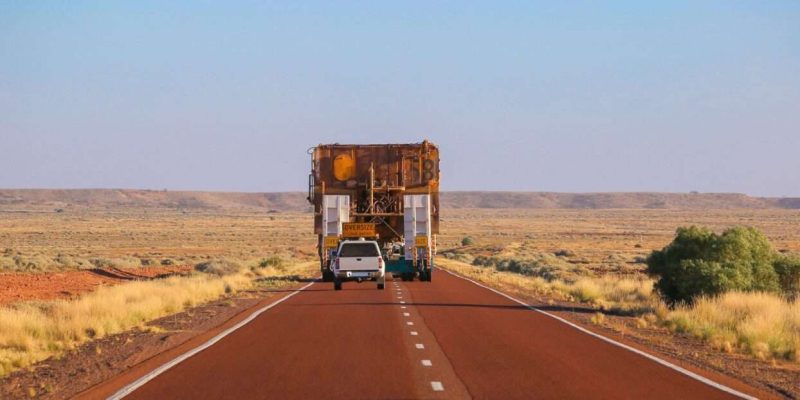
It should be no surprise that one of the top risks in the mining industry is around supply chain. We are still suffering delays in getting parts and materials while the manufacturing industry tries to play catch up. Political instability/ nationalisation has also increased, with the KPMG survey happening before the war in Ukraine started. Environmental risks, including new regulations, have also ascended up the list. This is due public becoming more aware of the impact the mining industry has on the environment.
What We Are Seeing
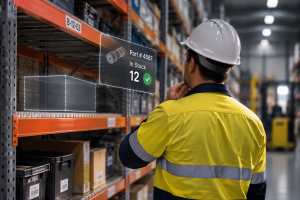
At Scope Systems we are seeing more customers invest in people management software to gain greater oversight over their workforce and scheduling. There has also been the realisation that a more automated workflow solutions is the way forward, helping to reduce unnecessary admin hours.
We’ve had a number of customers shift their data onto our cloud solution. Many customers choose it for the added layer of security and maintenance that our cloud solution offers.
There has also been a bigger push in companies investing in Business Intelligence solutions with a stronger focus on data driven decision making in all areas. This has also lead into companies wanting more from their solutions. Companies are looking for more integrated, streamline solutions with the popularity of AP invoicing on the rise with Peppol eInvoicing coming into the forefront this year.
In Summary
Our customers expect integrated solutions across their businesses to reduce administration hours and reliance on staff for menial tasks. People management software has also seen an increase in interest, most likely encouraged by the war on talent. Even though miners are less worried about retaining employees, this is most likely mitigated by proper scheduling.
In conclusion, companies are relying on technology now more than ever to reduce the load on their staff, organise their workforce efficiently, and drive their decision-making process. We think there will be a big focus on having integrated systems in the next few years, as well as reducing the number of hours spent on admin tasks through automated processes.